

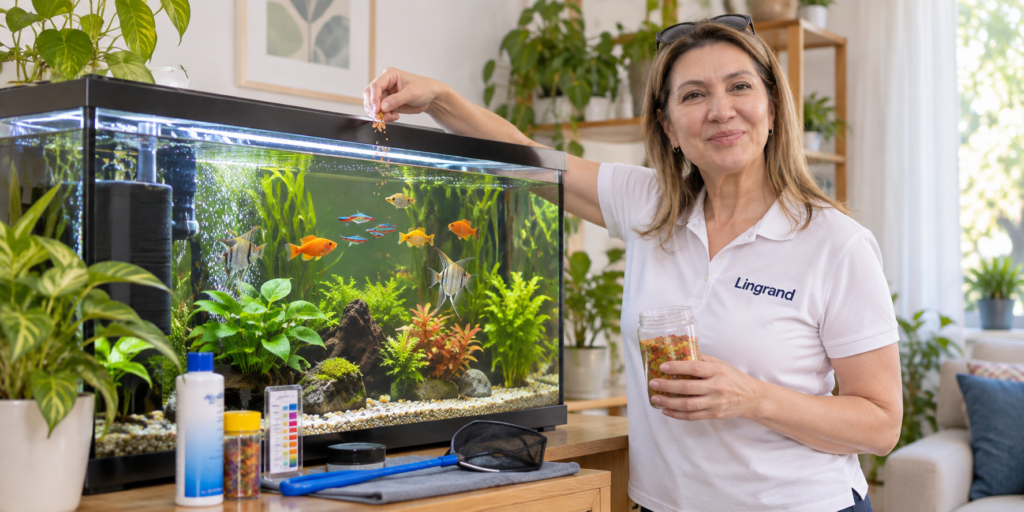
How to Quarantine New Fish is easiest when you slow the task down, prepare the right environment, and watch how your fish responds at each stage. This Lingrand guide explains the practical steps, common problems, and safety checks pet owners should understand before they begin.
Aquarium success depends on stable water chemistry, appropriate stocking, temperature control, filtration, oxygenation, quarantine habits, and slow changes. The exact details vary by species and individual pet, but the same principle applies: make the safe choice the easy choice, then build a routine that you can repeat.
Use this article as an educational guide, not as a replacement for veterinary diagnosis or individualized professional advice. If your pet seems painful, ill, highly stressed, or unsafe to handle, pause the project and get help from a veterinarian, certified trainer, behavior consultant, groomer, or experienced aquatic/exotic specialist as appropriate.
Quick Answer
To quarantine new fish, start by checking safety and fit, gather the supplies you need, choose a calm time, and work in short steps. Reward cooperation, observe your pet’s comfort, and change only one major factor at a time so you can tell what helps. If the task involves health, medication, water quality, diet, heat, or fear, be more conservative and ask a professional sooner.
Best Tips Before You Start
- Prepare supplies before your pet is involved so the session stays calm.
- Choose a time when your pet is rested, comfortable, and not already stressed.
- Use small rewards, breaks, and gentle handling instead of pressure.
- Stop early if you see fear, pain, overheating, breathing changes, or repeated refusal.
- Keep notes so the next session can start at the right difficulty.
What You Will Need
The exact supply list depends on the pet and the task, but these items cover most fish & aquariums situations related to this guide:
- liquid water test kit or reliable test strips
- dechlorinated water and clean buckets used only for aquarium care
- thermometer, filter media, siphon, and algae tools when relevant
- quarantine tank or container when introducing livestock
Do not improvise with unsafe household substitutes. If a tool touches the pet’s skin, mouth, cage, aquarium, food, water, or habitat, it should be clean, appropriate for the species, and easy to inspect.
Before You Start
Check the environment first. The area should be calm, well lit, and free from preventable hazards. For dogs and cats, that may mean closing doors, using a non-slip surface, and keeping other pets away. For birds, small pets, reptiles, amphibians, and aquariums, it may mean checking temperature, humidity, ventilation, water quality, escape risks, and stress from noise or handling.
Do not make sudden water or temperature changes unless livestock is in immediate danger. Test water before treating problems, and avoid mixing medications or chemicals without reliable instructions.
Step-by-Step Instructions
Step 1: Confirm the baseline before changing anything
Confirm the baseline before changing anything. Check diet, portions, water quality, temperature, weight, appetite, stool, or behavior depending on the topic.
Success at this step should look calm and repeatable. Your fish should be able to continue normal behavior, accept a reward or rest comfortably, and recover quickly if something is mildly surprising. If the pet freezes, fights, hides, pants heavily, refuses food, or becomes frantic, reduce the difficulty and give more time.
Step 2: Make changes gradually unless the situation is urgent
Make changes gradually unless the situation is urgent. Sudden changes can upset digestion, stress animals, or destabilize an aquarium or habitat.
Success at this step should look calm and repeatable. Your fish should be able to continue normal behavior, accept a reward or rest comfortably, and recover quickly if something is mildly surprising. If the pet freezes, fights, hides, pants heavily, refuses food, or becomes frantic, reduce the difficulty and give more time.
Step 3: Measure instead of guessing
Measure instead of guessing. Use test kits, scales, measuring cups, thermometers, written schedules, or photos so you can compare progress.
Success at this step should look calm and repeatable. Your fish should be able to continue normal behavior, accept a reward or rest comfortably, and recover quickly if something is mildly surprising. If the pet freezes, fights, hides, pants heavily, refuses food, or becomes frantic, reduce the difficulty and give more time.
Step 4: Watch the response
Watch the response. Appetite, activity, waste, breathing, posture, water parameters, and comfort tell you whether the plan is working.
Success at this step should look calm and repeatable. Your fish should be able to continue normal behavior, accept a reward or rest comfortably, and recover quickly if something is mildly surprising. If the pet freezes, fights, hides, pants heavily, refuses food, or becomes frantic, reduce the difficulty and give more time.
Step 5: Adjust carefully and seek expert help if the numbers or symptoms move in the wrong direction
Adjust carefully and seek expert help if the numbers or symptoms move in the wrong direction.
Success at this step should look calm and repeatable. Your fish should be able to continue normal behavior, accept a reward or rest comfortably, and recover quickly if something is mildly surprising. If the pet freezes, fights, hides, pants heavily, refuses food, or becomes frantic, reduce the difficulty and give more time.
Simple Practice or Care Schedule
| When | What to Do |
| First session | Prepare supplies, introduce the easiest version of the task, and stop before the pet becomes overwhelmed. |
| Next few days | Repeat short sessions, watch behavior, and make one small improvement at a time. |
| Weekly | Review cleaning, fit, diet, enrichment, training progress, or water/habitat records as relevant. |
| Monthly | Check whether supplies still fit the pet’s size, health, season, and household routine. |
Troubleshooting
Your pet refuses to participate
Refusal is information. The task may be too hard, the environment may be too distracting, the reward may not be valuable, or the pet may be uncomfortable. Make the next attempt shorter and easier. If refusal is sudden or paired with appetite loss, limping, hiding, breathing changes, or other symptoms, treat it as a possible health issue.
The setup creates more mess or stress
Recheck placement, size, materials, and routine. Many problems come from poor fit: a cage that is hard to clean, a brush that pulls, a carrier that is too small, a tank that is unstable, or a schedule that asks too much at the wrong time of day.
Progress stops after a good start
Plateaus usually mean one of three things: the next step is too large, the pet needs more repetition, or an underlying comfort issue has appeared. Go back to the last easy version, improve the reward or environment, and rebuild gradually.
Safety Checklist
- Confirm the pet is healthy enough for the task today.
- Use species-appropriate equipment and avoid painful or frightening methods.
- Keep sessions short and stop before stress escalates.
- Measure important details such as food, medication, temperature, humidity, water quality, or weight when they matter.
- Call a qualified professional when the problem involves illness, injury, aggression, severe fear, or repeated failure to improve.
Helpful Sources
- University of Florida IFAS aquarium guidance
- LiveAquaria acclimation and aquarium education
- Oklahoma State University Extension aquaculture resources
Final Thoughts
How to Quarantine New Fish should make life safer and easier for both you and your pet. Work slowly, observe carefully, and adjust the plan to the individual animal in front of you. When in doubt, choose the lower-stress option and get professional guidance before a small issue becomes a larger one.