

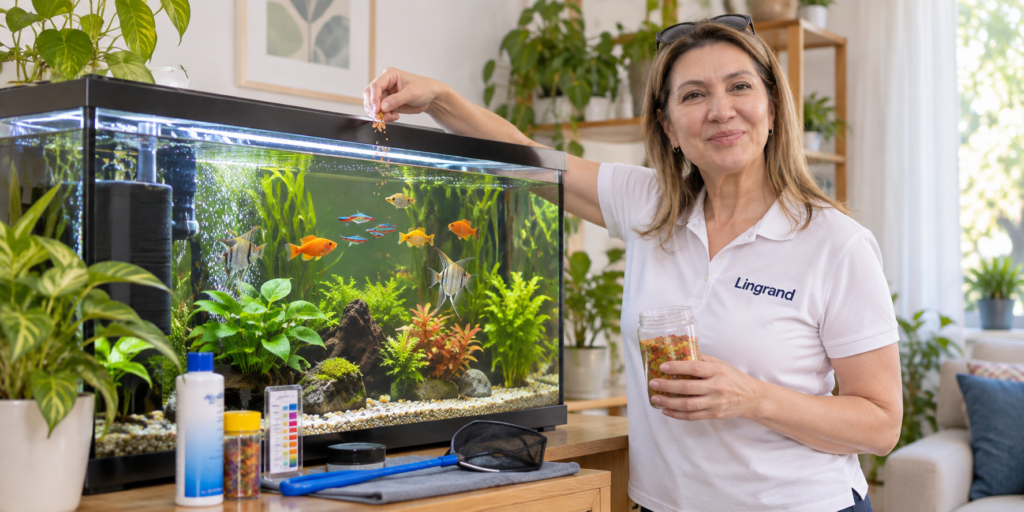
Bringing new fish home is exciting, but the first hour matters. Fish are moving from one water environment to another, and the differences may include temperature, pH, hardness, salinity, ammonia exposure in the transport bag, and stress from shipping or handling. Acclimation gives the fish a controlled transition instead of a sudden shock.
This guide covers a practical, careful acclimation process for freshwater community fish and notes when more specialized methods are needed. It does not replace species-specific care. Sensitive fish, marine fish, invertebrates, wild-caught animals, and fish arriving after long shipment may require a more conservative plan.
Quick Answer
Float the sealed bag to match temperature, dim the lights, compare basic water conditions if possible, slowly mix small amounts of tank water into the transport water, then move the fish with a net or container. Do not pour store or shipping water into your aquarium. Watch the fish and test water after introduction.
Before You Start: Confirm the Tank Is Ready
Acclimation cannot fix an unready aquarium. Before buying fish, confirm that the tank is fully set up, filtered, heated if needed, dechlorinated, and biologically stable. In a cycled freshwater aquarium, ammonia and nitrite should normally test at zero. Nitrate should be controlled through water changes and stocking decisions.
If ammonia or nitrite is measurable, delay adding fish. New fish increase the bio-load, and adding them to unstable water can turn a stressful move into a dangerous one.
What You'll Need
- A reliable thermometer.
- A water test kit for ammonia, nitrite, nitrate, and pH.
- A clean bucket or container used only for aquarium work.
- A fish net or specimen container.
- Airline tubing and a valve if using drip acclimation.
- A timer and towel for spills.
Step 1: Bring the Fish Home Calmly
Keep the bag upright, shaded, and protected from heat or cold. Go directly home when possible. Do not leave fish in a parked car. Temperature swings during transport can undo careful acclimation before it begins.
Step 2: Turn Down the Lights
Dim the aquarium lights and reduce activity around the tank. Bright lights and curious tankmates can make the new arrival more stressed. If your existing fish are aggressive feeders or territorial, feed them lightly before introduction so attention is not focused entirely on the newcomer.
Step 3: Float the Sealed Bag for Temperature
Float the sealed transport bag in the aquarium for about 15-20 minutes, unless the store or shipper gives species-specific instructions. This helps the bag water approach the tank temperature gradually. Keep the bag sealed during this stage so transport water does not enter the aquarium.
Step 4: Compare Water Conditions
If possible, test the transport water and tank water for pH and temperature. For marine systems, salinity matters too. A large difference calls for slower acclimation. The goal is not to chase exact numbers suddenly; it is to avoid rapid changes that stress the fish.
Step 5: Mix Tank Water Gradually
Open the bag and place the fish and bag water in a clean aquarium-only container, or roll down the bag top so it floats securely. Add a small amount of tank water every 5-10 minutes. For hardy freshwater fish from a local shop with similar water, this may take 20-30 minutes. For sensitive species, a drip line may be safer.
With drip acclimation, start a siphon from the aquarium to the container using airline tubing and adjust it to a slow drip. When the water volume doubles or triples, and temperature and basic parameters are close, the fish can be moved.
Step 6: Move the Fish Without Adding Transport Water
Use a soft net or specimen container to move the fish into the aquarium. Avoid pouring transport water into your tank. Store and shipping water may contain waste, medication residues, parasites, or pathogens. Move calmly and cover the container if the fish jumps.
Step 7: Observe Without Fussing
After release, leave the lights low for several hours. Some hiding is normal. Watch breathing, balance, fin position, and interactions with tankmates. Do not keep tapping the glass or rearranging the tank unless there is bullying or an immediate safety issue.
Acclimation Timeline
| Time | Action | What to watch |
| 0-20 min | Float sealed bag. | Temperature equalizing. |
| 20-50 min | Mix tank water gradually. | Fish remains upright and breathing steadily. |
| After release | Lights low, observe quietly. | No severe bullying or gasping. |
| Next 24-48 hr | Test water and monitor feeding. | Ammonia/nitrite stay at zero. |
Troubleshooting
The fish is gasping near the surface
Check temperature, oxygenation, ammonia, and nitrite. Increase surface agitation if needed. If multiple fish are gasping, treat it as a water-quality or oxygen problem, not just new-fish stress.
Existing fish are bullying the newcomer
Dim lights, rearrange a small amount of decor if appropriate, and add visual barriers. Severe aggression may require separating fish. Research compatibility before purchase to prevent this problem.
The fish will not eat right away
Many fish skip the first meal after transfer. Offer a small amount the next day. Remove uneaten food so water quality does not decline.
Common Mistakes
- Adding fish to an uncycled aquarium.
- Dumping transport water into the tank.
- Changing pH quickly to force a match.
- Skipping quarantine for valuable or disease-prone fish.
- Adding too many fish at once and overwhelming the filter.
When to Get Help
Contact an experienced aquarium professional, aquatic veterinarian, or knowledgeable aquatics shop if fish show severe distress, repeated losses occur after acclimation, water tests are confusing, or you keep sensitive species that need specialized parameters.
Frequently Asked Questions
Should I quarantine new fish?
Quarantine is strongly recommended when possible because it lets you observe new fish before exposing the main tank. The setup should be cycled, heated if needed, and appropriate for the species.
How long should acclimation take?
Hardy local freshwater fish may need about 30 minutes. Sensitive fish, marine fish, shrimp, and fish from very different water may need longer or drip acclimation.
Can I acclimate fish in the shipping bag overnight?
No. Bags are temporary transport containers. Prolonged confinement can increase waste exposure and stress.
Related How To Guides
Sources and Further Reading
- University of Florida IFAS aquaculture water-quality resources
- Oklahoma State Extension: water quality and nitrification
- LiveAquaria acclimation guidance
Special Cases: When to Go Slower
Some fish tolerate normal acclimation well. Others are less forgiving. Go slower with marine fish, shrimp, snails, discus, wild-caught fish, delicate schooling species, and any fish shipped for a long time. A longer trip can mean more waste in the bag and more stress, so keep the process calm and avoid sudden chemistry changes.
For shipped fish, follow the shipper's instructions because carbon dioxide and ammonia chemistry inside a sealed bag can change when the bag is opened. In some cases, speed and quarantine setup matter more than a long open-bag acclimation. When instructions conflict, defer to the seller or aquatic professional who knows how the fish were packed.
Quarantine Setup Basics
A quarantine tank does not need to be beautiful. It needs to be stable, cycled, heated if the species requires heat, covered if the fish jumps, and easy to observe. Many aquarists use simple hiding places, a sponge filter, and bare bottom glass so waste is easy to remove.
Observe new fish for appetite, breathing, spots, fin damage, unusual swimming, flashing, and compatibility concerns. Quarantine protects the main aquarium and gives the new fish a calmer place to recover from transport.
Aftercare for the First Week
- Test ammonia and nitrite daily at first if the tank is new or heavily stocked.
- Feed lightly until the fish is eating confidently.
- Keep lights moderate and provide hiding places.
- Watch tankmates during feeding and resting periods.
- Do not add more fish until the aquarium remains stable.
Why Store Water Should Stay Out of Your Tank
Transport water may look clear, but it is not the same as clean aquarium water. During transport, fish release waste and consume oxygen. Store systems may also use different treatments or share water among many tanks. Keeping that water out of your aquarium reduces the chance of adding extra waste or unwanted organisms.
This is also why calm handling matters. Netting can be stressful, but dumping bag water into the tank creates a different risk. Use a soft net, move quickly and gently, and keep the fish low over the container so it cannot fall if it jumps.
How Many Fish to Add at Once
Even a cycled aquarium has limits. Add fish gradually so the beneficial bacteria in the filter can adjust to the increased waste load. A sudden large group can create an ammonia or nitrite spike, especially in newer aquariums. If you are building a school of fish, add in sensible groups and test water afterward.
Signs the Fish Is Settling In
A newly acclimated fish should gradually begin exploring, holding normal body position, and responding to the environment. Schooling fish may seek their group, shy fish may hide at first, and bottom-dwellers may settle near cover. Improvement over the first day is more important than instant confidence. If breathing becomes rapid, color fades severely, or the fish cannot stay upright, test water immediately and seek experienced help.
Final Thoughts
Acclimation is about patience and water stability. A calm transfer, a ready aquarium, and careful observation give new fish a far better start than a rushed release.