

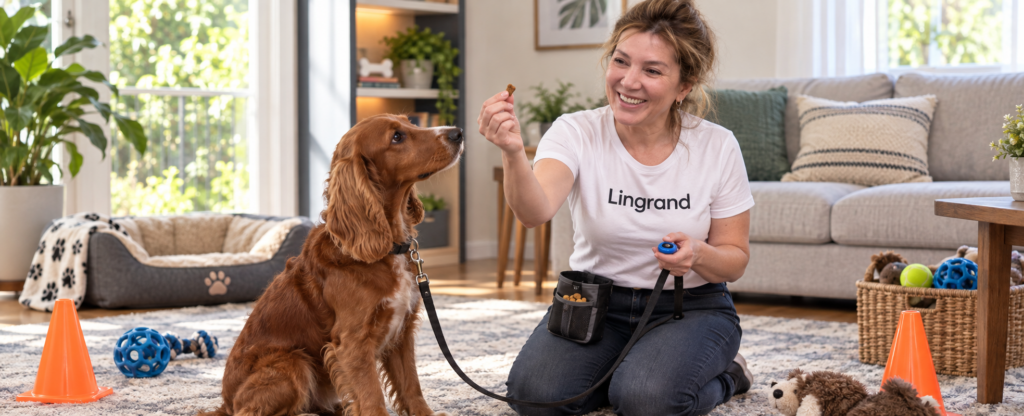
A dog who listens in the kitchen may suddenly forget everything at the park. That does not mean the dog is stubborn. It means the environment has changed. New smells, motion, people, dogs, food, wildlife, traffic, and noise all compete with you. Training around distractions teaches your dog that cues still matter when the world becomes interesting.
This guide explains how to train around distractions with distance, timing, rewards, and gradual difficulty. It uses positive reinforcement and avoids punishment-based methods that can increase fear or frustration. If your dog shows aggression, panic, or intense reactivity, work with a qualified trainer or veterinary behavior professional.
Quick Answer
Start in an easy place, use excellent rewards, add one distraction at a time, work far enough away that your dog can still think, reward attention quickly, keep sessions short, and increase difficulty only when the dog succeeds repeatedly. If the dog cannot respond, move farther away or make the task easier.
Understanding Threshold
Threshold is the point where a dog becomes too excited, worried, or focused on the distraction to learn well. Below threshold, the dog can notice the distraction and still respond. Over threshold, the dog may bark, lunge, freeze, pull, sniff frantically, or ignore food. Good training happens below threshold.
Distance is your friend. A dog who cannot focus ten feet from another dog may succeed at fifty feet. That success is not cheating; it is the training zone.
Step 1: Choose One Cue to Practice
Pick a simple behavior your dog already knows, such as name response, hand target, sit, or loose-leash walking. Do not teach a brand-new skill in a difficult environment. First make the known behavior strong in quiet places, then take it on the road.
Step 2: Pick the Right Rewards
Everyday kibble may work indoors but fail near distractions. Use rewards your dog genuinely values: small soft treats, a favorite toy, sniffing access, distance from something scary, or permission to greet when appropriate. The reward should match the difficulty of the environment.
Step 3: Start Far Away
Find a distraction at a distance where your dog can notice it without losing control. For example, practice across a parking lot from people, at the edge of a quiet park, or outside a pet store without entering. Ask for an easy cue. Reward immediately.
If your dog cannot take food, respond to the name, or reorient toward you, you are too close or the session is too hard. Move away and try again.
Step 4: Use Short Repetitions
Ask for a cue, reward, pause, and let the dog look around. You are not trying to force constant eye contact. You are teaching the dog to return to you even when distractions exist. Short successful repetitions build confidence faster than long drilling.
Step 5: Increase Only One Difficulty at a Time
Difficulty includes distance, duration, movement, noise, number of distractions, and reward value. Change one variable at a time. If you move closer to the distraction, keep the cue easy. If you ask for a longer stay, make the environment quieter.
Step 6: Practice Real-Life Rewards
Sometimes the best reward is what the dog wanted in the first place. If your dog looks at you calmly before sniffing a tree, release the dog to sniff. If your dog walks politely toward a friend, permission to greet may be the reward. This teaches self-control without making the environment feel forbidden.
Distraction Training Ladder
| Level | Example | Goal |
| Easy | Quiet room with toy on floor. | Dog responds quickly. |
| Medium | Front yard or quiet sidewalk. | Dog can reorient after looking. |
| Hard | Park at a distance from activity. | Dog works below threshold. |
| Very hard | Busy pet store or close dog traffic. | Practice only after easier levels succeed. |
Common Mistakes
- Starting too close to the distraction.
- Using rewards the dog does not care about in that environment.
- Repeating cues while the dog is already over threshold.
- Correcting fear or excitement instead of changing distance.
- Practicing only when the owner is rushed or frustrated.
Troubleshooting
My dog ignores treats outside
Try easier locations first, use higher-value rewards, and check stress level. Some dogs cannot eat when anxious or overexcited.
My dog barks at other dogs
Increase distance and reward calm looking before barking starts. For repeated lunging or aggression, get professional help.
My dog does well one day and poorly the next
That is normal. Sleep, stress, weather, hunger, and the specific distraction all affect performance. Adjust the session instead of pushing through.
When to Contact a Professional
Work with a certified positive-reinforcement trainer or veterinary behaviorist if your dog bites, lunges intensely, panics, cannot recover after seeing triggers, guards food or people, or if training feels unsafe. Behavior problems are easier to manage with skilled support.
Frequently Asked Questions
How long should sessions be?
Five to ten minutes is often enough. Stop while the dog is still succeeding.
Should I say “no” when my dog looks at distractions?
Usually no. Looking is normal. Reward the dog for calmly checking in with you and keep enough distance for learning.
Can puppies practice this?
Yes, but keep sessions short, gentle, and age-appropriate. Puppy socialization should be safe and positive.
Related How To Guides
Sources and Further Reading
- VCA dog training and behavior resources
- AVMA dog behavior and bite prevention resources
- American Veterinary Society of Animal Behavior position resources
Choose Training Locations on Purpose
Do not wait until the busiest park to begin distraction work. Build a list of locations from easy to hard: living room, driveway, quiet street, empty parking lot, park edge, pet-friendly store entrance, busier trail, and then closer activity. Move up only when the dog can respond reliably and recover quickly.
Visit hard environments without training sometimes. Sit far away, let the dog sniff, reward calm observation, and leave before frustration builds. These low-pressure sessions teach the dog that distracting places do not always predict intense work or conflict.
Reward Placement Matters
Where you deliver the reward affects the next behavior. If your dog forges ahead, reward beside your leg. If the dog fixates on a trigger, reward after turning away so the treat supports reorientation. If the dog is nervous, reward while increasing distance. Good placement makes the next repetition easier.
Safety and Equipment
Use equipment that gives control without pain. A well-fitted harness, regular leash, and treat pouch are enough for many dogs. Avoid retractable leashes around traffic, crowds, or other dogs because they reduce control and can create tangles. Do not use training setups that put your dog close enough to rehearse lunging, barking, or panic.
What Progress Looks Like
Progress may look small: your dog glances at a jogger and then back at you, takes a treat near a distant dog, or walks away from a smell when called. Those moments matter. They show the dog can think in the presence of distraction, which is the foundation for more advanced reliability.
When Food Stops Working
If your dog suddenly refuses treats around distractions, the environment is probably too hard. The answer is usually more distance, a quieter location, better rewards, or a shorter session. Do not interpret treat refusal as stubbornness. Many dogs stop eating when they are worried, overexcited, or too close to something they want to chase or greet.
Change one variable at a time. Move farther from the distraction, switch to a higher-value reward, or ask for an easier behavior such as name response instead of a long stay. When the dog can succeed again, you can gradually rebuild difficulty.
Training Around People and Dogs
Practice polite observation before close greetings. Reward your dog for noticing a person or dog and then turning back to you. If greetings are allowed, keep them brief and end while the dog is still calm. Many dogs lose control because greetings last too long or because every sighting becomes a chance to pull forward.
For dogs who bark, lunge, hide, growl, or panic, work with a qualified positive-reinforcement trainer or veterinary behavior professional. Distraction training should not force a fearful dog into situations it cannot handle. The goal is calm learning, not simply suppressing outward behavior.
A Simple Weekly Practice Plan
- Two short sessions at home to refresh cues.
- Two easy outdoor sessions where distractions are visible but distant.
- One sniff walk with rewards for voluntary check-ins.
- One rest day or very low-pressure walk.
Do Not Train Past the Dog’s Limit
End sessions while the dog can still respond. Waiting until the dog is frantic, barking, or pulling hard teaches the wrong pattern and makes the next session harder. A clean exit is part of training: say your cue, move away, scatter a few treats if helpful, and let the dog recover. Success around distractions is built from many manageable repetitions, not one heroic outing.
Keep notes after each session: location, distance from distractions, reward used, and what your dog could handle. These notes make progress easier to see and help you avoid repeating setups that are too difficult.
Final Thoughts
Training around distractions is not about overpowering the environment. It is about making the lesson easy enough that your dog can win, then slowly expanding what success looks like.