

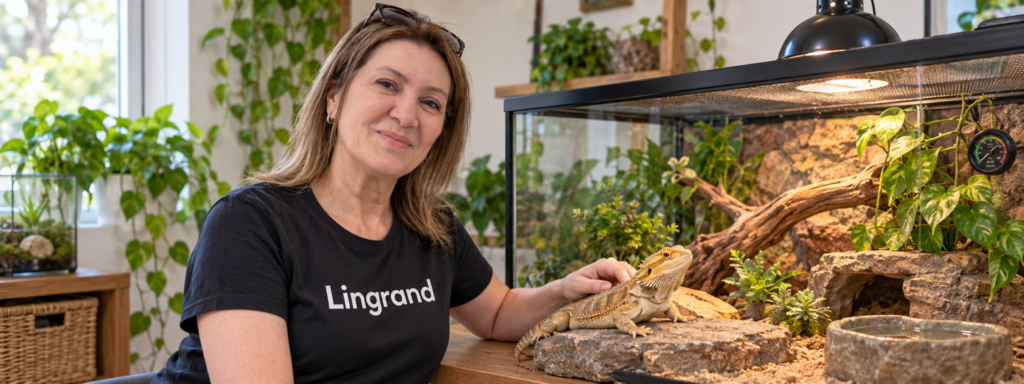
A reptile terrarium is not just a display tank. It is a controlled environment that must match the reptile's biology. Heat, light, humidity, hiding places, substrate, ventilation, and diet all work together. A setup that looks attractive but has the wrong temperature or humidity can cause real health problems.
This guide gives a practical framework for setting up a reptile terrarium. Because reptiles vary widely, a leopard gecko, corn snake, bearded dragon, crested gecko, and turtle do not need the same habitat. Use species-specific husbandry guidance and consult an exotic-animal veterinarian for health concerns.
Quick Answer
Choose an enclosure sized for the species, create a temperature gradient with a regulated heat source, provide appropriate UVB when required, monitor humidity with reliable gauges, use safe substrate, add warm and cool hides, include clean water, secure the lid, and test conditions for several days before bringing the reptile home.
Step 1: Research the Exact Species
Start with the animal, not the tank. Arboreal reptiles need climbing height. Terrestrial reptiles need floor space. Burrowing species need deeper substrate. Tropical species need different humidity than desert species. Young animals may need more protected feeding and hiding areas, while adults may need much larger enclosures.
Step 2: Choose the Enclosure
Glass, PVC, melamine, and screen-topped enclosures all have tradeoffs. Glass is easy to view but can lose heat. PVC often holds heat and humidity better. Screen tops improve ventilation but may dry the habitat. The enclosure must be escape-proof, easy to clean, and large enough for temperature zones.
Step 3: Create a Heat Gradient
Reptiles regulate body temperature by moving between warmer and cooler areas. A terrarium should have a warm side and a cool side, with basking temperature appropriate for the species. Do not heat the whole enclosure to one temperature. Without a gradient, the reptile cannot choose what it needs.
Use thermostats with heat mats, ceramic emitters, radiant heat panels, or other heat sources where appropriate. Unregulated heat sources can overheat and burn animals. Measure surface and air temperatures with suitable thermometers; do not rely on guesswork.
Step 4: Plan Lighting and UVB
Some reptiles require UVB lighting to support vitamin D metabolism and calcium balance. Others may need lower UVB or different lighting schedules. UVB bulbs must be positioned at the correct distance and replaced according to manufacturer guidance because output changes over time.
Do not place glass or plastic between the UVB source and the reptile unless the product instructions say it is appropriate; many materials block useful UVB. Provide shaded areas so the reptile can move away from bright light.
Step 5: Control Humidity and Ventilation
Humidity that is too low can contribute to poor sheds in some reptiles, while humidity that is too high can create respiratory or skin problems for others. Use a hygrometer and adjust ventilation, misting, water placement, and substrate based on the species.
A humid hide can help some shedding reptiles without making the entire enclosure too damp. Keep it clean and monitor for mold.
Step 6: Choose Safe Substrate and Decor
Substrate should support the species' behavior while limiting ingestion, dust, mold, and impaction risk. Paper towels are useful for quarantine or young animals. Bioactive and loose substrates require more knowledge and monitoring. Avoid cedar, pine, scented materials, and anything sharp or dusty.
Add hides on both warm and cool sides. Branches, rocks, and platforms must be stable so they cannot collapse. Heavy decor should rest on the enclosure floor before substrate is added if the animal burrows.
Step 7: Test Before the Reptile Arrives
Run the completed terrarium for several days. Check morning and evening temperatures, basking surface, cool side, humidity, thermostat behavior, and water access. Adjust now, before a live animal depends on the setup.
Setup Checklist
| Need | What to confirm |
| Heat | Warm side, cool side, basking area, thermostat. |
| Light | Appropriate UVB and day/night cycle. |
| Humidity | Species range measured with a hygrometer. |
| Security | Escape-proof lid and stable decor. |
| Hides | At least warm and cool hiding options. |
| Water | Clean dish or aquatic area as species requires. |
Common Mistakes
- Using one generic setup for all reptiles.
- Skipping a thermostat on heat equipment.
- Guessing temperature instead of measuring it.
- Using the wrong UVB distance or never replacing bulbs.
- Putting a reptile into an untested habitat.
When to Contact an Exotic Veterinarian
Contact an exotic-animal veterinarian if the reptile stops eating unexpectedly, has breathing changes, swollen joints, retained shed around eyes or toes, burns, wounds, severe lethargy, diarrhea, shell problems, or abnormal posture. Husbandry problems and health problems often overlap, so bring setup details and temperature/humidity records.
Frequently Asked Questions
Can I use a fish tank for a reptile?
Sometimes, but it depends on ventilation, access, heat retention, and species needs. Aquariums are not automatically good reptile habitats.
Do all reptiles need UVB?
No, but many benefit from or require it. Research the specific species and ask an exotic veterinarian when unsure.
How often should I clean the terrarium?
Spot clean waste promptly and follow species-appropriate deep-cleaning routines. Bioactive systems have different maintenance than simple setups.
Related How To Guides
Sources and Further Reading
- VCA reptile housing resources
- Merck Veterinary Manual reptile husbandry and health references
- RSPCA reptile welfare guidance
Recordkeeping Makes Reptile Care Safer
A notebook or phone note can prevent many husbandry mistakes. Record warm-side temperature, cool-side temperature, basking surface temperature, humidity, feeding, shed dates, weight when practical, and bulb replacement dates. If your reptile becomes sick, these details help an exotic veterinarian understand whether the environment may be contributing.
Do not rely on stick-on analog gauges alone, especially for critical temperatures. Use appropriate digital thermometers, probe placement, and an infrared temperature gun when useful. Check conditions at the times your reptile actually uses the habitat, not only once during setup.
Feeding and Cleaning Areas
Plan where feeding will happen before the animal arrives. Some reptiles eat in the enclosure, while others may need special handling depending on species and keeper experience. Food dishes, water dishes, and insect feeding areas should be easy to clean. Remove uneaten insects when they may bother or bite the reptile.
Spot clean waste quickly. Replace water often. Disinfect appropriately during deeper cleanings, then rinse and dry surfaces so chemical residue does not remain. Reptiles can carry Salmonella, so wash hands after handling reptiles, enclosure items, substrate, or water dishes, and keep reptile equipment away from kitchen sinks and food-prep surfaces.
Bringing the Reptile Home
When the terrarium is stable, introduce the reptile calmly and give it time to hide. Avoid unnecessary handling during the first settling period. A new reptile may refuse food briefly from stress, but prolonged refusal, weight loss, weakness, or abnormal breathing should be discussed with an exotic-animal veterinarian.
Quarantine and Veterinary Planning
If you already keep reptiles, quarantine the new reptile in a separate area when possible. Use separate tools, wash hands between animals, and avoid moving decor or dishes between enclosures. Parasites, mites, respiratory infections, and stress-related illness can spread before obvious symptoms appear.
Find an exotic-animal veterinarian before there is an emergency. Reptile illness can be subtle: hiding more than usual, weight loss, poor sheds, swollen eyes, mouth changes, wheezing, weakness, or repeated food refusal may be signs that the setup or the animal needs professional attention. A correct habitat is prevention, but it is not a substitute for care when something is wrong.
Common Setup Mistakes
- Using one temperature reading instead of checking warm side, cool side, and basking surface.
- Choosing loose substrate for a species or life stage where ingestion risk is high.
- Mixing animals that should live separately.
- Using colored night bulbs that disturb normal light cycles.
- Forgetting that UVB bulbs weaken over time even when they still produce visible light.
Species research should happen before shopping. A desert reptile, tropical gecko, aquatic turtle, and terrestrial snake do not need the same enclosure. Start with the animal’s natural history and build the terrarium around temperature, humidity, lighting, hiding, climbing, soaking, and feeding needs.
Backup Supplies to Keep Nearby
A reptile setup depends on equipment, so keep basic backups ready. Spare bulbs, a digital thermometer, clean water dishes, paper towels, reptile-safe disinfectant, and an emergency transport container can save time when something fails. For species that require precise heat or humidity, a broken bulb, stuck thermostat, or dry enclosure can become urgent quickly.
Label cords and timers so another family member can understand the setup if you are away. A terrarium should be simple enough to check at a glance: which lamp controls heat, which lamp provides light or UVB, what the normal temperature range is, and when water or misting is due.
After setup, watch the reptile instead of only watching the equipment. A healthy animal should be able to choose warmer and cooler areas, hide securely, move normally, and behave in a way that fits its species. If the animal always stays in one spot, soaks constantly, avoids basking, or tries to escape, recheck the environment before assuming the behavior is normal.
Final Thoughts
A safe reptile terrarium is measured, tested, and species-specific. Get the environment right before the animal arrives, and keep monitoring because small equipment changes can affect the whole habitat.